
 Photoshop
 Houdini
 Unreal Engine
 Substance Painter
 Blender
 Nuke
Nuke Arnold
 KeyShot
 V-Ray
V-Ray Substance Designer
 Mari
Mari Marvelous Designer
 Marmoset Toolbag
 3ds Max
 3DCoat
 Redshift
 After Effects
 Faceform Wrap
 Lightroom
 OctaneRender
 SpeedTree
 Daz 3D
 Agisoft Metashape
 Fusion
 Modo
Modo Gaea
Gaea Cinema 4D
 Gravity Sketch
 Premiere
 Procreate
 Substance 3D Modeler
 Katana
 Mudbox
 Krita
Krita World Creator
 Yeti
Yeti Ziva VFX
 SketchBook
 Quixel DDO
 Mixamo
 Natron
 Quixel Bridge
 Quixel Megascans
 Adobe Medium
 Quixel Mixer
 SynthEyes
 Clip Studio Paint
 SketchUp
 Unity
Unity Gaffer
 Massive
 Materialize
 Ornatrix
 PreForm
 Corel Painter
 Moi 3D
 QuickTime
 Storyboard Pro
 TreeIt
 animBot
 ReCap
ReCap Meshmixer
 DaVinci Resolve
 World Machine
 xNormal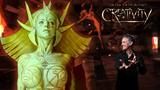


23 Lessons
Ara introduces his workshop, which provides a comprehensive guide to modern photogrammetry workflows for creating professional-grade 3D assets from real-world subjects. By combining multiple industry-standard software tools and both automated and manual techniques, Ara's lessons offer a complete pipeline for transforming physical objects into versatile digital assets suitable for various entertainment and media applications.
Duration: 1m 13s

Ara discusses The Scan Truck and showcases how professional photogrammetry has evolved into a sophisticated and systematic process for creating high-quality 3D assets. Their advanced multi-camera setup and streamlined workflow from capture to final optimized model reflect the growing industry demand for photorealistic digital humans in entertainment and interactive media. This technology represents the intersection of hardware innovation and software processing that's making photorealistic 3D content creation more accessible to the industry.
Duration: 2m 29s

This lesson establishes the foundation for working with photogrammetry in RealityCapture by explaining both the underlying process and the software interface. Ara emphasizes that, while the photogrammetry workflow involves complex computational processes, RealityCapture's interface is straightforward and accessible. Understanding the navigation controls and tab organization will enable users to efficiently progress through the photogrammetry pipeline from raw photographs to finished 3D assets.
Duration: 19m 41s

This lesson demonstrates Ara's core photogrammetry workflow in RealityCapture, transforming over 200 high-resolution photographs into a detailed 3D mesh with 21.7 million triangles. His process emphasizes the importance of high-quality input data, proper project organization, and sufficient computing power for optimal results. The resulting model captures fine details, including facial features, muscle definition, and clothing textures, setting the stage for further texturing and post-processing.
Duration: 24m 17s

This lesson demonstrates the remarkable capabilities of modern photogrammetry for creating production-ready 3D assets with photorealistic detail. While RealityCapture excels at capturing and processing scan data, Ara's workflow requires additional cleanup and UV optimization in ZBrush and Maya. The combination of high-resolution geometry and detailed texture maps creates assets suitable for close-up work in games and films, though Ara explains why some post-processing is necessary to make the models fully production-ready.
Duration: 24m 13s

Ara showcases troubleshooting techniques essential for processing 3D scans effectively in RealityCapture, though most scans won't require extensive correction. He walks through how, out of the 12-14 scans processed, only a couple encountered these specific issues. Proper model alignment and component management ensure clean, usable 3D models ready for further processing in software such as ZBrush for retopology.
Duration: 8m 32s

Ara's structured approach to 3D scan processing provides flexibility for different project requirements, from simple static sculptures to complex animated characters. His three-scenario system allows artists to choose the appropriate level of complexity based on their specific needs, whether for 3D printing, static display, or full character animation. Ara's emphasis on analyzing scan results upfront ensures that both the strengths and weaknesses of the captured data are understood before proceeding with the chosen workflow.
Duration: 2m 38s

This lesson establishes the foundation for an efficient 3D scan retopology workflow in ZBrush by providing custom tools and demonstrating optimal import procedures. Ara discusses how the FBX format offers significant advantages over OBJ for 3D scan data, including automatic texture integration, smaller file sizes, and reduced manual steps. ZBrush's ability to handle massive polygon counts makes it an excellent choice for processing high-resolution 3D scan data, though proper workflow organization through custom menus can greatly improve efficiency.
Duration: 14m 24s

This lesson shows how to transform unusable raw scan data into a professional-quality, sculptable asset by systematically addressing common photogrammetry issues. Ara demonstrates that creating multiple representations of the same model, from a clean low-poly base to high-resolution detail, provides the flexibility to efficiently edit and refine the sculpture at any level of detail while maintaining the original scan's accuracy and likeness.
Duration: 39m 52s

Ara's comprehensive cleanup workflow demonstrates how to systematically remove unwanted elements from complex 3D-scanned geometry while preserving essential model structure and detail. The key to success lies in working strategically at lower subdivision levels for major edits, then carefully managing the re-projection process to maintain high-quality surface detail. Ara's methodology provides a solid foundation for converting raw 3D scan data into clean, production-ready assets suitable for further sculpting, texturing, and rendering workflows.
Duration: 42m 44s

This lesson provides a comprehensive workflow for cleaning up 3D scan data in ZBrush, transforming raw scan geometry into production-ready models. The key to successful cleanup lies in understanding which subdivision level to work at for different types of problems, using the right combination of brushes, and knowing when to rely on artistic interpretation versus strict adherence to scan data. The final result can serve multiple purposes, from 3D printing to game assets, with proper cleanup being essential for professional-quality output.
Duration: 31m 15s

Ara presents a retopology technique that combines the benefits of clean, animation-ready topology with high-resolution scan detail. While the manual alignment process in ZBrush is time-intensive, it provides studios with full control over the final mesh structure. Ara emphasizes that this foundational step is crucial for successful projection and animation, setting up the model like a "topology suit" that will eventually capture all the detail from the original scan while maintaining the geometric flow needed for character rigging and animation.
Duration: 23m 21s

This comprehensive lesson demonstrates professional techniques for cleaning up 3D-scanned models in ZBrush. Ara's combination of sculptural fixes, advanced texture-projection methods, and seamless integration with external editing tools creates a powerful pipeline for transforming raw scan data into production-ready assets. Ara showcases ZBrush's versatility in handling complex cleanup tasks that would traditionally require multiple specialized applications.
Duration: 27m 9s

This lesson showcases ZBrush's powerful projection capabilities for retopology, allowing artists to capture the detail of high-resolution 3D scans while maintaining clean, animatable topology. The systematic approach of projecting at multiple subdivision levels ensures optimal detail transfer while avoiding common topology problems. The final result is a production-ready asset that combines the visual fidelity of the original scan with the technical requirements for animation and real-time rendering applications.
Duration: 29m 35s

ZSphere retopology in ZBrush offers precise control over topology creation, making it ideal for animation-ready models, though it is more time-consuming than automated solutions. The key to success lies in careful planning through painted guidelines and systematic quad-by-quad construction. Ara's manual approach provides the control needed to achieve proper edge flow around critical areas, such as facial features, ultimately resulting in a topology suitable for character animation.
Duration: 28m 8s

This lesson demonstrates a methodical approach to retopology in Maya that prioritizes animation-ready topology over pure geometric accuracy. By understanding facial anatomy and starting with minimal, well-structured geometry based on muscle groups, artists can create efficient models that deform naturally while maintaining the subject's likeness. The key insight is that good topology follows biological structure rather than just surface detail.
Duration: 49m 10s

Ara's retopology technique provides an efficient, organized approach to creating a clean mesh topology from 3D scan data. By establishing junction points first and building connections between them, artists can create well-structured models with proper edge flow while maintaining flexibility for different production requirements. Ara's method emphasizes planning and systematic construction over ad-hoc polygon placement.
Duration: 22m 21s

Ara's systematic approach to connecting body parts in 3D modeling emphasizes organization and planning over rushed execution. By establishing key junction points with eight-sided face loops and maintaining clean quad topology throughout, artists can create animation-ready meshes that are easy to modify and UV-map. Ara's method demonstrates that starting simple and gradually building complexity yields better results than attempting to create detailed geometry from the beginning.
Duration: 23m 46s

Ara's retopology approach produces a highly organized, professional hand mesh that excels in both animation and texturing workflows. The use of eight-sided cylinders and proper edge flow yields a clean, quad-only topology that deforms well during animation while offering efficient UV-mapping options. The four-part symmetrical structure allows for streamlined modeling workflows and easy modifications when needed.
Duration: 45m 6s

This lesson demonstrates professional retopology workflows that prioritize efficiency and clean topology. The techniques showcased, such as mirroring existing geometry, using live surface-snapping, and strategically planning edge loops, are essential production skills that save significant time while maintaining high-quality results. Ara emphasizes that, while beginners might benefit from doing everything manually for practice, production environments require these time-saving shortcuts to meet tight deadlines.
Duration: 35m 30s

This lesson effectively demonstrates that retopology decisions should be driven by the 3D model's final use case. Ara shows that understanding whether you're creating a hero asset or background element directly impacts the level of geometric detail needed. His methodical approach of using simple primitives, maintaining clean topology, and preparing models for ZBrush projection provides a solid foundation for professional 3D modeling workflows.
Duration: 22m 37s

Wrap 3 demonstrates remarkable efficiency for retopology workflows, automatically projecting clean topology onto scan data with minimal manual intervention. While some fine-tuning in ZBrush may still be necessary for areas such as facial features, the software dramatically reduces the time and effort required to process 3D scans. This makes it an invaluable tool for studios or artists who regularly need to process multiple scans, offering professional-quality results through an intuitive node-based interface.
Duration: 23m 53s

Ara discusses how his workshop provides a comprehensive end-to-end solution for creating professional-quality 3D character assets from photogrammetry scans. His demonstrated workflow enables creators to produce versatile digital assets that can serve multiple purposes across various media production contexts, from static display pieces to fully animated characters for entertainment and educational content.
Duration: 46s

Primary tools
For this workshop you’ll need:


* Note that these programs and materials will not be supplied with the course.
Project Files
When you download the workshop files, you'll get access to a complete 3D character modeling project with all the source files you need to follow along. Inside, you'll find:
- ZBrush project File – The main sculpting project with high-resolution character details and sculpting history
- Maya project File - Complete Maya scene setup for retopology, rigging, and final model preparation
- ZBrush preset file - A file storing custom brush settings, including IMM brushes
Skills Covered
Who’s this Workshop for?
This workshop is designed for intermediate to advanced 3D artists, character modelers, and technical artists working in film, television, gaming, and VFX industries who want to integrate photogrammetry into their production pipelines for creating realistic character assets.
Game developers, VR content creators, and digital sculptors will also benefit significantly from learning these efficient workflows. Artists will gain practical knowledge of industry-standard tools and techniques that streamline the process of converting real-world scan data into animation-ready assets.
Learning Outcomes
By completing this workshop, artists will master a comprehensive photogrammetry pipeline for creating production-ready character assets across multiple industry-standard applications.
Key skills include:
- How to process photogrammetry images in Reality Capture to generate optimized 3D models and textures.
- How to effectively clean up and simplify scan data using ZBrush's advanced modeling capabilities.
- How to utilize ZModeler, Dynamesh, and ZRemesher for efficient mesh processing and projection workflows.
- How to create animation-ready topology over scan geometry with Maya's Quad Draw and Modeling Toolkit.
- How to automatically wrap clean topology onto 3D character scans using Wrap3 software.
- How to optimize topology requirements and methodology for both static and animatable mesh assets.
- How to integrate multiple software packages into a seamless production pipeline for character development.


