
 Photoshop
 Maya
Maya Substance Painter
 Blender
 Nuke
Nuke Arnold
 KeyShot
 V-Ray
V-Ray Substance Designer
 Mari
Mari Marvelous Designer
 Marmoset Toolbag
 3ds Max
 3DCoat
 Redshift
 After Effects
 Faceform Wrap
 Lightroom
 OctaneRender
 SpeedTree
 Daz 3D
 Agisoft Metashape
 Fusion
 Modo
Modo RealityCapture
 Gaea
Gaea Cinema 4D
 Gravity Sketch
 Premiere
 Procreate
 Substance 3D Modeler
 Katana
 Mudbox
 Krita
Krita World Creator
 Yeti
Yeti Ziva VFX
 SketchBook
 Quixel DDO
 Mixamo
 Natron
 Quixel Bridge
 Quixel Megascans
 Adobe Medium
 Quixel Mixer
 SynthEyes
 Clip Studio Paint
 SketchUp
 Unity
Unity Gaffer
 Massive
 Materialize
 Ornatrix
 PreForm
 Corel Painter
 Moi 3D
 QuickTime
 Storyboard Pro
 TreeIt
 animBot
 ReCap
ReCap Meshmixer
 DaVinci Resolve
 World Machine
 xNormal





Continuing on from Giovani Magana’s introductory workshop, where he covers the core fundamentals of building game-ready environments, this new workshop focuses on using Houdini to develop procedural workflows to create high-quality assets.
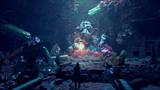
The goal of this 4-hour workshop is to walk artists through the entire environment creation process, using artist-friendly workflows in Houdini. Giovani guides mid-level artists who already have some basic experience with Houdini in getting started with using the software as part of a creative pipeline. He walks through building a stylized fantasy environment to showcase the tools and techniques involved.
The workshop begins in Houdini, where Giovani begins building key architectural elements, including walls, floors, and pillars, and setting up a clean, modular blockout. From there, he moves into detailing the set pieces. He discusses how to build out your own Digital Asset Library for faster iteration and walks artists through how he creates his own rock formations – with very little sculpting – while still retaining control and shape variation.
Giovani covers how to blend assets naturally into your environment, and how to create your own complex master material, giving you the power to blend multiple materials, add realism, and introduce variation to your models. Artists will learn how to generate complex crystal formations procedurally and how to prepare them for texturing and shading, setting the stage for a stylized fantasy vibe.
To conclude the workshop, Giovani takes a quick look at some of his favorite Unreal Engine features, including PCG and Fracture.
13 Lessons
This workshop examines how successful fantasy environment creation requires extensive planning and reference gathering before touching any 3D software. By carefully balancing fantastical elements with real-world geological and ecological principles, Giovani Magana demonstrates how to create believable and immersive fantasy worlds. A methodical approach of rejecting references that don't fit, studying how crystals naturally form within rocks, and making deliberate color palette choices ensures that strong environmental art comes from informed creative decisions.
Duration: 12m 21s

Houdini is an artist-friendly tool that can enhance traditional modeling workflows without requiring deep technical knowledge or scripting expertise. By demonstrating practical techniques for creating weathered stone columns through a combination of procedural and manual methods, Giovani explains how Houdini can accelerate repetitive tasks while preserving creative control. This hybrid approach makes the software more accessible, and artists explore its value as a career-enhancing tool for speeding up asset creation.
Duration: 23m 19s

This lesson provides a procedural workflow for creating destructible stone walls in Houdini, emphasizing reusability of node networks and randomization techniques. While the approach allows for flexible, non-destructive iteration, Giovani acknowledges that certain detail work, particularly fine surface sculpting, is better suited to traditional tools like ZBrush. Artists learn to balance procedural techniques with practical considerations about which tools work best for specific tasks in a production pipeline.
Duration: 16m 7s

Mastering procedural noise workflows in Houdini is essential for efficient 3D asset creation. Giovani explains that by building a reusable library of noise networks and learning to layer, mask, and combine different noise types, surfaces that would otherwise be time-consuming to sculpt manually can be generated quickly. Artists understand that using Houdini for procedural blocking before moving to ZBrush for final touches represents a professional workflow that balances speed with artistic control.
Duration: 25m 40s

Using Houdini assets in Maya through the Houdini Engine creates a powerful procedural workflow for environment artists. This approach allows teams to leverage procedural capabilities without requiring every member to work directly in the simulation software, a workflow Giovani highlights as a way to maintain flexibility during the blockout stage. Artists master these techniques, particularly for game development, where assets must adhere to specific grids and metrics while still maintaining visual complexity.
Duration: 12m 15s

Rather than pursuing complete automation, the workflow presented leverages procedural strengths for base forms and variation while recognizing that final artistic touches in ZBrush often produce superior results. This hybrid approach demonstrates that the most effective digital sculpting workflows combine multiple tools strategically, allowing for quick work on foundational elements. Artists understand how to retain the ability to add unique, hand-crafted details that give each asset character and authenticity.
Duration: 31m 7s

A well-organized test environment is essential for senior artists creating modular kits, serving both as a quality control measure and a communication tool for team collaboration. By testing individual pieces and their combinations in isolation before integration, Giovani shows how to catch problems early, iterate faster, and maintain consistency across large environments. Artists realize the core idea is to start with simple variations, validate the core concepts, and gradually expand the kit under various conditions.
Duration: 12m 37s

This lesson explores a professional workflow for creating flexible, layered master materials in Unreal Engine that can be instanced and customized for various assets. By combining material functions, vertex painting, and height-based blending, Giovani demonstrates how to build efficient material systems that are both visually compelling and optimized. Artists explore how proper parameter organization and testing ensure materials remain manageable and artist-friendly throughout production.
Duration: 22m 22s

This lesson dives into an advanced material workflow that creates highly customizable, layered rock materials suitable for complex game environments. By combining baked texture masks, material functions, and world-aligned blending, Giovani highlights a system that allows for creating convincing natural surfaces with dirt accumulation and weathering effects. Artists learn that while complex, this modular approach provides a scalable foundation for building diverse environmental materials efficiently.
Duration: 23m 44s

Creating believable crystals and rocks requires understanding both the artistic and technical aspects of 3D modeling. While ZBrush offers intuitive control for adding natural imperfections, the procedural workflow Giovani demonstrates excels at generating complex rock formations and scattering systems. Artists realize the central insight to success lies in choosing the right tool for each task and understanding that the final crystal appearance depends heavily on proper material setup.
Duration: 25m 23s

This lesson highlights a practical workflow for implementing Houdini RBD simulations into game engines, emphasizing the procedural advantages for game development rather than just VFX. While these simulations are a deep topic, Giovani explains how to create dynamic breaking-ground effects through proper node setup, attribute management, and engine integration. Artists learn that combining simulation tools with real-time sequencers gives powerful control over the timing of physics-based animations.
Duration: 20m 35s

The PCG framework provides smart, automated ways to populate scenes with detail while preserving artistic control through node-based filtering. While certain fracture tools may not integrate with specialized software, Giovani demonstrates that they offer a convenient in-engine solution for quickly creating destructible assets during prototyping. Artists learn how these systems enable the scaling of world-building efforts without sacrificing quality or spending excessive time on repetitive manual tasks.
Duration: 20m 19s

This final breakdown emphasizes that creating high-quality 3D environments is a lengthy, iterative process requiring patience and attention to detail. The main advice Giovani provides for aspiring artists is to prioritize quality over quantity by focusing on smaller, well-polished areas rather than attempting massive scenes. Artists understand that this approach allows for better learning of the complete pipeline and produces stronger final results for a portfolio.
Duration: 12m 33s

Primary tools
For this workshop you’ll need:


* Note that these programs and materials will not be supplied with the course.
Skills Covered
Who’s this Workshop for?
Giovani Magana's workshop is structured for mid-level environment artists and technical artists who have basic Houdini experience and want to integrate procedural workflows into their production pipeline. It's perfect for professionals working in the game industry who need to create high-quality assets for environments efficiently.
Technical directors, level designers, and senior artists looking to expand their procedural toolkit will also benefit significantly from this training. Artists will gain practical skills for building reusable asset libraries, creating complex materials, and developing smart workflows that enhance productivity while maintaining creative control over stylized environments.
Learning Outcomes
Upon finishing this workshop, artists will have strengthened their procedural techniques for creating production-ready fantasy environments using Houdini's artist-friendly workflows.
Key skills include:
- How to build modular architectural elements including walls, floors, and pillars procedurally.
- How to create and organize Digital Asset Libraries for faster iteration workflows.
- How to generate complex rock formations with minimal sculpting while maintaining shape variation.
- How to blend multiple assets naturally into cohesive environmental compositions using Houdini.
- How to develop complex master materials that blend multiple textures and add realism.
- How to create procedural crystal formations and prepare them for texturing workflows.
- How to integrate Houdini assets with Unreal Engine features like PCG and Fracture.


